
Cart
0
A diecast display can have carefully chosen cars and a convincing backdrop yet still feel empty. Adding a few 1:64 scale figures gives the vehicles a human reference and suggests what is happening around them. A driver waiting beside a race car or a small group near a storefront can change the whole scene.
The useful question is not how many figures you can fit. It is which people, poses and proportions make sense beside the models you already own. Start with scale, then choose a simple activity and arrange the figures around it.
How tall are 1:64 scale figures?
At 1:64 scale, one unit on the model represents 64 units in real life. A figure representing a six-foot-tall adult would be approximately 1.125 inches, or 28.6 millimeters, tall when standing straight. A person who is five feet six inches tall would be around 26.2 millimeters at the same scale.
Those are calculated references, not a universal product specification. People differ in height, and miniature poses change the measurement. A seated driver, crouching mechanic or figure wearing a helmet may not measure like a standing pedestrian. Check the stated scale and any actual dimensions before buying.
Also distinguish the figure's height from its overall packaged size. A base can lift the feet above street level and affect how the figure looks beside a low sports car.
Will all 1:64 figures match all 1:64 cars?
The shared scale is a sensible starting point, but it does not guarantee a perfect visual match. Figure proportions, base thickness and the way a car has been modeled can change the result. A broad stance or oversized head can look stylized beside a finely proportioned vehicle.
Use the car as a reference when reviewing photos. Imagine the figure standing beside the door, not just beside the roof. Compare the height of the shoulders, head and waist with the vehicle's proportions. Remember that a tall SUV and a low race car should naturally relate differently to the same person.
If you are mixing manufacturers for the first time, start with one small set. Test it in the display before buying several packs that may not share the same visual style.
Choose the people to suit the scene
Drivers for a race or paddock display
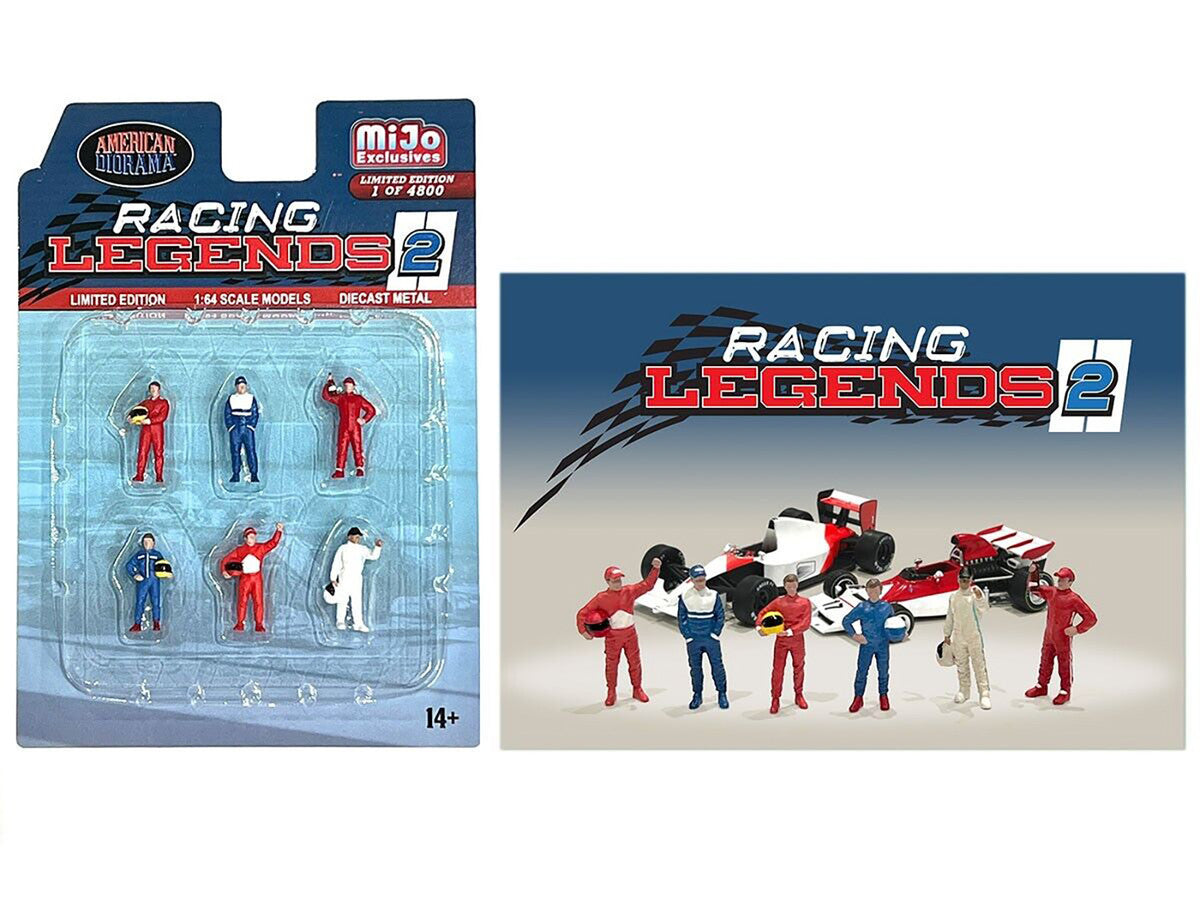
Driver figures can give a racing collection a clear theme. Look at suits, helmets, colors and stance, and check whether the set represents specific people or a general racing style. A standing figure beside a car does not need the same pose as someone intended for a cockpit.
The American Diorama Racing Legends six-driver set is one relevant example to compare. Confirm the exact figures and accessories listed rather than assuming the vehicles in a promotional photograph are included.
Pedestrians for a street or storefront
A person facing a shop entrance, waiting at a curb or looking toward a parked car gives a scene direction. Choose poses that look natural together. Several figures all facing the viewer can look like a product lineup instead of people occupying a space.
Leave room for an imaginary walking route. A crowded doorway or a person standing in the path of a moving vehicle can make the arrangement harder to read unless that is deliberately part of the story.
Workers for a service area
Mechanics and workshop figures work best when their hands, gaze and stance relate to something nearby. A person bending forward should have a plausible task, while a figure holding a tool should be positioned where it makes sense to use it.
Check the scene before adding more accessories. One worker beside a vehicle may be enough to establish activity. Too many unrelated people and objects can hide the model you wanted to showcase.
Standing figures and seated figures do different jobs
A standing miniature is usually easier to place because it does not need to fit inside another model. Seated figures require more checks: the seat width, leg position, steering wheel and available headroom all matter.
Do not assume a figure will fit inside a closed diecast car because both items are labeled 1:64. The model may have a fixed body, simplified interior or insufficient access. Check whether the figure is designed for that exact vehicle or intended only for display alongside it.
The same applies to motorcycles. A rider's hands and legs need to match the bike's geometry. A motorcycle sold with a figure may offer a coordinated display, but the listing should establish whether the person actually mounts the bike or stands next to it.
For example, compare the contents and photos of the CM Model MV Agusta F3 Rosso with figure before planning its position in a street scene.
Paint, material and included accessories
Miniature figures may use metal, resin or plastic, depending on the release. The material name alone does not tell you how well the pose, paint or facial details are executed. Inspect the actual product images and read the construction notes.
- Paint application: look for clear separation between clothing, skin, footwear and accessories.
- Pose: check whether the hands, feet and line of sight suit your intended scene.
- Base: confirm whether one is present, how visible it is and whether it raises the figure.
- Contents: verify the number of figures and which loose accessories are supplied.
- Finish: consider whether the colors look consistent with your cars and backdrop.
- Handling: note delicate limbs, tools or other small projecting parts.
Prepainted and ready-made do not necessarily mean suitable for rough handling. Small display miniatures are different from larger articulated action figures. Follow the age guidance for the specific product and keep tiny parts away from young children.
Arrange the figures before fixing anything in place
Start with the main vehicle and one focal activity. Place the figures temporarily, then look from the angle at which you normally view the shelf. Move them until the car's important details remain visible.
- Set the vehicle position. Leave enough surrounding room for the people and the action.
- Add one main figure. Use its gaze or gesture to direct attention toward the vehicle or building.
- Add supporting figures sparingly. Check that each one contributes to the scene.
- Review the spacing. People should not overlap unnaturally or block doors and walking routes.
- Take a quick photo. A phone image can reveal awkward gaps and tangencies that are easy to miss on the shelf.
If the figures need securing, ask the manufacturer about a suitable method for their finish and the display surface. Test compatibility on an inconspicuous area where appropriate. Avoid putting adhesive on a collectible vehicle simply to make a person stand beside it.
Build a small display that can grow
A compact scene is easier to adjust than a crowded permanent layout. Choose one location, a consistent scale and a limited group of people. You can later expand the setting without replacing every figure.
Browse 1:64 diorama settings and accessories with the scale and dimensions of each item in mind. The collection contains different products, so check individual specifications rather than assuming everything shown shares one scale.
For photos, use a viewpoint close to the figures' eye level and keep the background simple. Higher camera angles can emphasize the miniature base; a lower view often helps the people and vehicles relate more naturally. Avoid placing a tiny figure directly against a large background object if it makes the proportions confusing.
Frequently asked questions
How big is a 1:64 scale person?
A standing figure representing a six-foot adult is theoretically about 28.6 millimeters tall. Actual products vary with the intended person, pose and base.
Are 1:64 figures the same as HO scale figures?
No. HO is commonly 1:87, so a figure representing the same person would be smaller. Check the scale instead of treating all miniature people as interchangeable.
Can you put a figure inside any 1:64 car?
No. Access, seat dimensions and the figure's pose determine whether it fits. A shared scale label alone is not enough.
How many figures should a small display have?
Begin with one or two and assess the result. Add more only when they support the activity and leave the main vehicle visible.
What should I check before ordering a figure set?
Confirm scale, approximate dimensions, poses, material, paint, bases and exact contents. Check whether cars, buildings or other props in the photos are sold separately.