
Cart
0

Scale numbers can look backwards at first. A 1:64 car sounds as though it should be larger than a 1:18 car, but the opposite is true. Imagine dividing the length of a full-size vehicle into equal parts: dividing it by 64 produces a much smaller model than dividing it by 18.
Once that rule makes sense, comparing model car sizes becomes straightforward. Smaller scales can fit dozens of vehicles into a cabinet or miniature street. Larger scales take more room, but their size can make body lines, interiors, wheels, badges, and opening features easier to appreciate. This guide explains the main diecast scales and helps beginners, parents, hobbyists, collectors, and gift buyers choose confidently.
What Do Diecast Car Sizes Mean?
A diecast scale is the ratio between a model and the real vehicle it represents. At 1:64 scale, one inch on the model represents 64 inches on the full-size vehicle. At 1:24 scale, one inch represents 24 inches. The scale applies proportionally to length, width, and height, although manufacturers may simplify details or adjust parts slightly for production, safety, or styling.
A useful formula is: full-size vehicle length divided by the scale number equals approximate model length. If a real car is 15 feet long, first convert 15 feet to 180 inches. The same car would be about 2.8 inches long at 1:64, 4.2 inches at 1:43, 5.6 inches at 1:32, 7.5 inches at 1:24, 10 inches at 1:18, and 15 inches at 1:12.
-
A larger second number means a smaller model. A 1:64 car is smaller than a 1:43, 1:24, or 1:18 version of the same vehicle.
-
A smaller second number means a larger model. A 1:18 car is larger than a 1:24 car when both reproduce the same full-size vehicle.
-
Scale is not one fixed physical length. A pickup, limousine, bus, or semi-truck will be longer than a compact car even when both models use the same scale.
-
Scale is different from product dimensions. The ratio explains how the model relates to the real vehicle; the listed length, width, and height tell you whether that specific item will fit your shelf or case.
Important for parents: A scale recommendation is not an age or safety recommendation. Some diecast models have small parts, sharp details, delicate mirrors, or collector-grade packaging and are intended for display rather than play. Always check the manufacturer's age grade, warnings, and product description.
Diecast Car Size Chart
The chart below uses a typical passenger car of roughly 15 feet as a reference. Exact measurements vary with the real vehicle, the manufacturer, and the model's design.
|
Scale |
Approx. length |
Relative feel |
Often chosen for |
|---|---|---|---|
|
1:64 |
2.5-3 in |
Pocket-size |
Large collections, play-ready products, compact displays, city and garage dioramas |
|
1:43 |
3.5-5 in |
Compact display |
Collectors seeking more presence without giving up too much shelf space |
|
1:32 |
4.5-6 in |
Medium-small |
Play, display, some slot-car collections, and buyers wanting a middle size |
|
1:24 |
7-8 in |
Substantial |
Gifts, visible shelf displays, casual and established collectors |
|
1:18 |
9-12 in |
Large display |
Detailed centerpiece models, enthusiasts, larger cabinets and shelves |
|
1:12 |
14-16 in |
Oversized |
Premium statement pieces and collectors with dedicated display space |
The ranges are intentionally approximate. A 1:64 semi-truck can be much longer than a 1:64 sports car because the real truck is longer. Packaging, bases, antennas, wings, trailers, and accessories can also increase the space a model needs. Measure the complete product footprint when planning a display.
Popular Diecast Car Scales Explained
1:64 Scale Diecast Cars
A 1:64 scale diecast car is one of the most familiar small formats. A typical passenger car is about 2.5 to 3 inches long, so this scale makes it practical to collect many vehicles, organize them by brand or era, and build miniature streets, garages, parking lots, and race-day scenes in a limited area. Small models can still carry impressive paint, wheel, and tampo details, but features such as opening doors are less common and interiors are harder to see.
Best for: beginner collectors, large collections, compact shelves, play-oriented models that are age-appropriate, photography with miniature environments, and 1:64 dioramas.
Keep in mind: Small size does not automatically mean child-safe. Check for small parts and fragile components, and compare the actual length of trucks or long vehicles rather than assuming every 1:64 item is the same size.
1:43 Scale Diecast Cars
A 1:43 scale diecast car usually measures around 3.5 to 5 inches long. It occupies less space than a 1:24 or 1:18 model but gives the sculpt, livery, wheels, and proportions more visual presence than many smaller cars. The scale has long been popular for display collections, motorsport subjects, road cars, and vehicles presented on labeled bases or inside clear cases.
Best for: collectors who want a balance of detail and space efficiency, display cabinets, themed lineups, and smaller premium collections.
Keep in mind: Accessories and diorama elements need to use the same or a visually compatible scale. A 1:43 car can look noticeably oversized beside 1:64 buildings and figures.
1:32 Scale Diecast Cars
At roughly 4.5 to 6 inches for many passenger cars, 1:32 sits between compact collector models and larger display pieces. It is large enough for details to read clearly, yet still manageable for a shelf. The scale is also widely associated with slot cars, although a static diecast model and a powered slot car are different products and may not share the same features or intended use.
Best for: buyers who want a middle-size model, age-appropriate play products, casual display, and collectors interested in compatible 1:32 vehicles or racing setups.
Keep in mind: Do not assume every 1:32 car will run on a slot-car track. Check the product type, electrical system, track compatibility, and manufacturer instructions before buying it for racing.
1:24 Scale Diecast Cars
A typical 1:24 scale diecast car is about 7 to 8 inches long. It feels substantial in the hand and on a shelf without demanding as much room as a 1:18 model. At this size, body contours, interiors, wheel designs, printed graphics, and engine details are easier to appreciate. Depending on the manufacturer and price point, some models may also include opening doors, hoods, or trunks.
Best for: gifts, visible shelf displays, car enthusiasts who prefer larger models, and collectors who want a strong middle ground between space and detail.
Keep in mind: Opening features and high detail are not guaranteed by scale. Read the product description and inspect photos instead of assuming every 1:24 model has the same functions or finish quality.
1:18 Scale Diecast Cars
A 1:18 scale diecast car is often around 9 to 12 inches long and is designed to command attention. The larger body allows manufacturers more room to reproduce interiors, brakes, wheels, badges, engine bays, panel gaps, and other features. For collectors who want one favorite vehicle to become the focus of a shelf or cabinet, 1:18 is a natural choice.
Best for: serious collectors, premium displays, automotive enthusiasts, detailed photography, and centerpiece models in larger cabinets.
Keep in mind: One car can occupy the space of several smaller models. Include extra clearance for open doors, presentation bases, mirrors, and packaging, and make sure the shelf can safely support the combined weight of a large collection.
1:12 Scale Diecast Cars
At roughly 14 to 16 inches for many passenger cars, 1:12 is a large premium scale. These models can have exceptional visual impact and may reproduce fine interior, engine, suspension, and exterior features. They work best when the collector has a dedicated display position and wants a small number of statement pieces rather than a dense lineup.
Best for: specialist collections, premium gifts for committed enthusiasts, display rooms, offices, and centerpiece installations.
Keep in mind: Measure the display before ordering. A long vehicle, presentation base, or open body panel can require significantly more room than the model's closed-body length suggests.
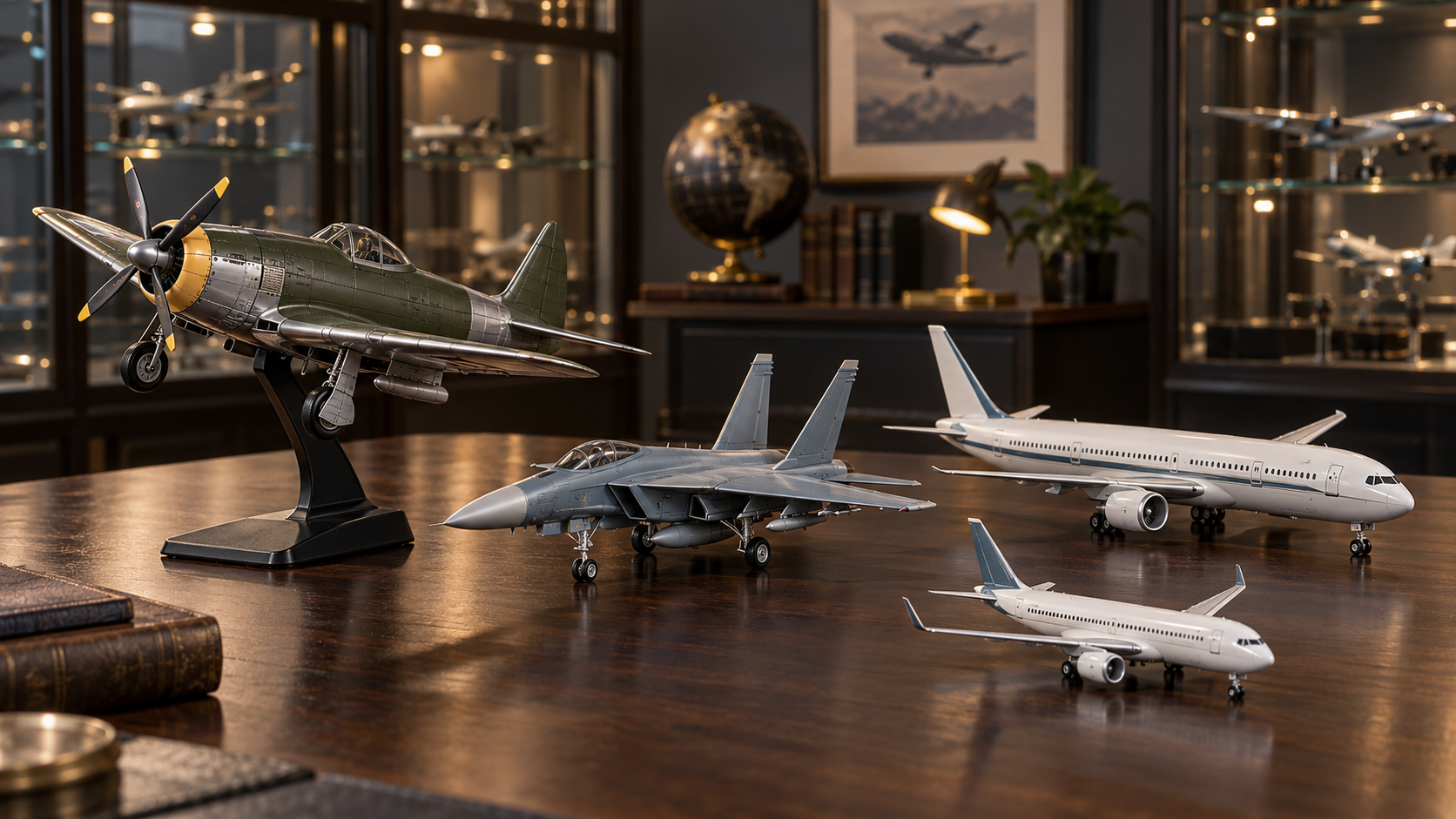
What about other scales? Diecast and model vehicles also appear in sizes such as 1:72, 1:76, 1:87 (HO), 1:50, 1:48, 1:25, and larger specialty formats. Aircraft, construction equipment, military vehicles, trucks, and railway-related models often follow scale traditions that differ from passenger cars. Use the same ratio rule and check the listed dimensions before buying.
Which Diecast Car Size Is Best?
There is no single best diecast scale to collect. The right answer depends on who will use the model, how it will be displayed, and what matters most: quantity, detail, handling, compatibility, or visual impact.
Best Diecast Size for Kids
For a product that is specifically rated and designed for play, 1:64 is easy to hold, store, and collect, while 1:32 can feel more substantial and may make details easier to see. Durability, age grading, and part construction matter more than scale alone. Collector models with delicate mirrors, antennas, removable parts, sharp details, or display bases may not be suitable toys even when they are small.
Best Diecast Size for Collectors
Choose 1:64 when the goal is a broad collection with many makes, eras, colors, or racing liveries. Choose 1:43 when you want a compact display with more presence. Move to 1:24 or 1:18 when visible detail and individual model impact matter more than fitting the maximum number of cars into the room. A focused collection can mix scales, but separate them by shelf or theme so the display feels intentional.
Best Diecast Size for Display
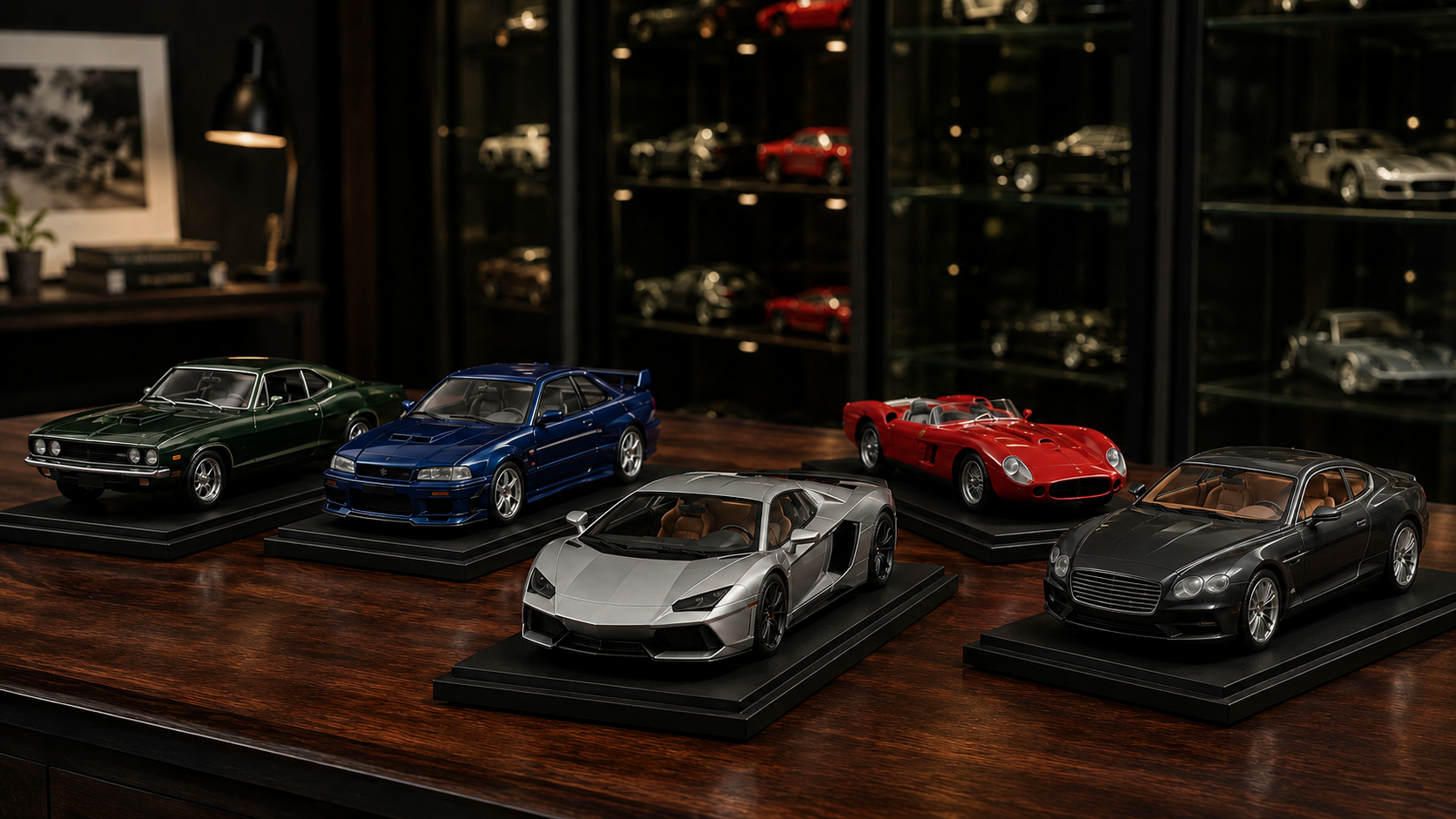
For a standalone shelf, desk, or cabinet centerpiece, 1:24 and 1:18 offer strong visual impact. A 1:43 lineup can look especially polished in a cabinet because several cars fit at eye level without becoming visually crowded. The best scale is the one that leaves breathing room around each model and lets you see it without constantly moving other pieces.
Best Diecast Size for Dioramas
For compact streets, parking lots, gas stations, garages, and multi-vehicle scenes, 1:64 is usually the most space-efficient choice. A 1:43 scene can provide more visible detail but needs a larger base, figures, buildings, and accessories. A single 1:24 or 1:18 car can work in a workshop bay, studio-style display, or photo backdrop, but a full street scene at those scales becomes large quickly.
Best Diecast Size for Gifts
A 1:24 model is a practical middle option: it feels substantial, displays well, and is easier to place than many 1:18 or 1:12 pieces. However, the most memorable gift is usually the recipient's favorite vehicle, team, manufacturer, movie car, racing livery, or era in a size that fits their space. If you are unsure, ask how large their shelves are and whether they already collect a specific scale.
How to Choose the Right Diecast Scale
Before buying, decide where the model will go and what role it should play. Then use the filters and product dimensions in the shop diecast cars by size collection to compare options that suit your plan.
-
Measure the available space. Record the usable width, depth, and height of the shelf or case. Leave clearance for a base, mirrors, antennas, open doors, and safe handling.
-
Decide between quantity and impact. Smaller scales let you display more vehicles. Larger scales give each car more visual weight and make details easier to see.
-
Set a collection budget. Scale can influence price, but manufacturer, licensing, materials, production run, features, and rarity also matter. Compare the specific model rather than assuming every small car is inexpensive or every large car is premium.
-
Choose the purpose. A model for play, a glass cabinet, tabletop photography, a slot-car system, and a street diorama have different requirements.
-
Check age and handling needs. For children, follow the age grade and warnings. For collectors with limited dexterity, a larger model may be easier to handle, although it may also be heavier and have more delicate features.
-
Match the theme and category. Cars, trucks, motorcycles, aircraft, construction machines, and military vehicles do not always share the same most common scales. Choose a scale that supports the type of collection you want.
-
Read the product dimensions and features. Confirm length, width, material, moving or opening parts, base, packaging, and intended use. The scale name alone cannot answer all of these questions.
Diecast Car Sizes for Displays and Dioramas
A successful display treats scale as part of the design. Models look more convincing when the surrounding figures, tools, buildings, road markings, furniture, and vehicles share the same scale. Small differences can be acceptable in a stylized display, but a 1:64 car beside a 1:43 figure or fuel pump may look obviously mismatched.
For cabinet displays, calculate capacity using the actual footprint of the model plus a gap between pieces. A 36-inch shelf may technically hold twelve 3-inch cars nose to tail, but the lineup will be difficult to see and handle. Fewer cars with consistent spacing often look better. Risers can create a second viewing level, while clear cases help reduce dust and accidental contact.
For dioramas, start with the largest fixed object. A building, road section, garage, aircraft hangar, or trailer can determine the base size before the vehicles are added. At 1:64, a scene can fit on a desk or bookcase. At 1:43, the same real-world area needs about 1.5 times the length and width. At 1:24 or 1:18, a single service bay may be more practical than an entire street.
Big Boy Toys carries diecast cars, trucks, cycles, military subjects, and related display pieces across multiple formats, making it possible to explore diecast models around a chosen scale, vehicle type, or display theme. Check each listing carefully because vehicle size and scale conventions can differ across categories.
Are Bigger Diecast Cars Always Better?
No. Larger models often provide more room for visible details, but size does not guarantee accuracy, quality, opening parts, or collector value. A well-made 1:64 car can have excellent proportions, paint, wheels, and printed graphics, while a basic 1:18 model may prioritize price or play features over fine realism. Manufacturer, product line, materials, tooling, finish, and quality control all matter.
Bigger models also create practical tradeoffs. They cost more to ship and store, need deeper shelves, collect dust over a larger surface, and can be heavy when several are displayed together. Smaller scales make it easier to build a varied collection, arrange scenes, and move models safely. The better question is not 'Which scale is biggest?' but 'Which scale best supports the collection I want to build?'
-
Choose smaller scales for more cars. 1:64 and 1:43 are efficient when variety and shelf capacity matter.
-
Choose larger scales for stronger individual presence. 1:24 and 1:18 make body shape and interior detail easier to appreciate from across a room.
-
Choose one scale for realistic scenes. Matching vehicles, figures, buildings, and accessories keeps a diorama visually consistent.
-
Choose the vehicle first for an emotional purchase. A favorite car in the available scale can be more satisfying than a less meaningful model in a theoretically ideal size.
Common Mistakes When Choosing Diecast Car Sizes
-
Assuming all diecast cars are the same physical size. Scale ratios and real vehicle dimensions both affect the final model length.
-
Buying before measuring the shelf. Depth is often the limiting dimension, especially for angled displays, bases, open doors, long trucks, and aircraft.
-
Mixing scales accidentally. A difference between 1:64, 1:55, and 1:43 may be obvious when models are displayed in one scene.
-
Treating scale as a guarantee of detail. Features depend on the manufacturer and product line. Read the listing and study the photos.
-
Choosing a child's model by size alone. Check age grading, small-parts warnings, durability, and whether it is intended for play.
-
Ignoring packaging and bases. A display case, plinth, trailer, wing, or antenna can make the total footprint larger than the vehicle body.
-
Buying several large models without a storage plan. Keep boxes and delicate accessories protected, and make sure shelves can support the total weight.
-
Prioritizing size over the collection's purpose. Vehicle type, brand, era, livery, rarity, budget, and display style may matter more than choosing the largest model available.
Final Thoughts
Diecast car sizes become easy to compare once you remember one rule: the lower the second number, the larger the model. A 1:64 car is compact and efficient for big collections or miniature scenes. A 1:43 or 1:32 model offers a middle ground. A 1:24 car feels substantial without being enormous, while 1:18 and 1:12 models create stronger display impact and demand more room.
The best diecast scale is the one that fits the buyer's space, budget, handling needs, and reason for owning the model. Measure first, check the specific product dimensions, match scales when realism matters, and never use scale alone as a substitute for an age or safety rating.
When you are ready to compare vehicles, browse the Big Boy Toys Diecast collection and narrow the choice by scale, vehicle type, brand, and the amount of display space available.
Frequently Asked Questions
What are the most common diecast car sizes?
Common diecast car sizes include 1:64, 1:43, 1:32, 1:24, and 1:18. Larger 1:12 models and smaller specialty scales are also available. The most useful scale depends on the vehicle category, available space, desired detail, and whether the model is intended for play, display, racing, or a diorama.
What does 1:64 mean in diecast cars?
A 1:64 scale model is one sixty-fourth as long, wide, and tall as the real vehicle. One inch on the model represents 64 inches on the full-size vehicle. A typical 15-foot passenger car would be about 2.8 inches long at 1:64, although trucks and other long vehicles will be larger.
Is 1:18 bigger than 1:24?
Yes. A 1:18 model is larger than a 1:24 model of the same vehicle because the real dimensions are divided by 18 instead of 24. A 15-foot car would be about 10 inches long at 1:18 and 7.5 inches long at 1:24.
What is the best diecast car size for collectors?
There is no universal best size. Choose 1:64 for a large, varied collection; 1:43 for compact display detail; 1:24 for a substantial middle size; or 1:18 for large, high-impact display models. The right scale is the one you can display, store, and enjoy consistently.
What diecast size is best for kids?
For models specifically designed and age-rated for play, 1:64 is easy to handle and store, while 1:32 can feel more substantial. Scale alone does not determine safety or durability. Always check the age grade, small-parts warning, materials, and intended use on the product listing.
What diecast size is best for display?
For individual visual impact, 1:24 and 1:18 are strong display sizes. A 1:43 collection can also look polished while fitting more vehicles into a cabinet. Measure shelf width, depth, and height, including any presentation base or open body panels, before deciding.
How long is a 1:24 diecast car?
Many 1:24 passenger cars are about 7 to 8 inches long. The exact length depends on the real vehicle: a 1:24 pickup, limousine, or truck will be longer than a 1:24 compact car. Use the listed product dimensions for an exact fit.
Can I display different diecast scales together?
Yes, especially when shelves are organized by scale, brand, vehicle type, or theme. For realistic dioramas, keep vehicles, figures, buildings, and accessories at the same scale. If scales are mixed on one shelf, use separate groupings so the size changes look intentional.