
Carrito
0
A diorama for kids is a small 3D scene that shows a place, story, event, or idea. Kids often build dioramas inside a shoebox or on a display base using paper, paint, toys, figures, cars, and craft supplies.
It is a fantastic way to bring imagination to life, whether for a school diorama project or just for fun at home. These hands-on projects turn imagination into something you can see and touch.
While a shoebox diorama is a classic childhood staple, dioramas are also incredibly popular with older kids and miniature collectors. From realistic city streets to detailed garage setups for diecast cars, building these tiny worlds is a rewarding hobby that grows with you.
This blog provides comprehensive details on dioramas for kids, examples of these toys, and ideas for creating them.
What Is a Diorama?
A diorama is a three-dimensional model scene made from several elements that work together to tell a story. Unlike a single toy or drawing, a diorama includes a background, a detailed setting, figures, and smaller props that work together to tell a specific story.
Here are a few common examples you might see:
-
A rainforest with trees, animals, and a river
-
An ocean scene with fish, coral, and seaweed
-
A dinosaur scene with rocks, plants, and a volcano
-
A city street with cars, buildings, and signs
-
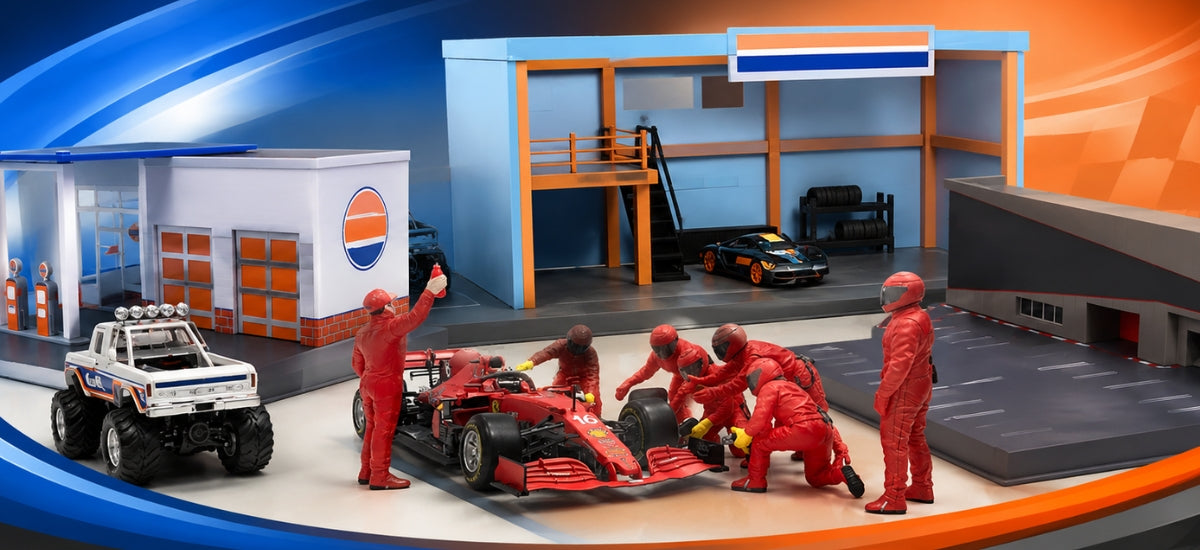
A garage scene with diecast cars, tools, and lifts
-
A gas station scene with pumps, figures, and miniature cars
So, if you are wondering what a diorama for kids is, this is it: a hands-on way to show a moment, place, or topic in 3D.
Why Do Kids Make Dioramas?
Kids make dioramas because they turn ordinary lessons into a hands-on, visual adventure. They are common in classrooms because a diorama project for kids makes complex topics much easier to understand and present.
Here is why teachers and parents love them:
-
Visual Learning:
They help children explain big ideas without just relying on words.
-
Boosts Creativity
Planning a scene encourages artistic expression and storytelling.
-
Builds Organizational Skills
Kids learn how to plan, layer information, and construct a physical layout.
-
Versatile Subjects
They fit perfectly into science, history, reading, art, and social studies.
-
Interactive Fun
It turns study time into an engaging crafting session.
Diorama Examples for Kids
If you are looking for inspiration, here are some classic and highly effective diorama examples that work wonderfully for school or weekend crafting.
-
Rainforest Diorama
A vibrant jungle scene packed with green paper trees, hanging vines, exotic insects, and toy animals moving through the swampy river.
-
Ocean Diorama
A blue underwater scene with fish cutouts, coral, seaweed, shells, and sea animals.
-
Dinosaur Diorama
A prehistoric landscape utilizing real twigs for logs, clay volcanoes, small rocks, and plastic dinosaurs roaming the earth.
-
Solar System Diorama
A deep-space project with a painted black background, glowing stars, and painted styrofoam balls representing the planets orbiting the sun.
-
Farm Diorama
A charming countryside layout featuring a cardboard barn, popsicle-stick fencing, faux grass, and miniature farm animals.
-
Book Report Diorama
A moment from a story showing characters, setting, and the key scene from the book.
-
City Street Diorama
A tiny urban center featuring mapped-out roads, cardboard buildings, small street signs, and miniature pedestrians.
-
Garage or Car Diorama
A detailed workshop scene showcasing a model car diorama, complete with tiny vehicle lifts, tools, mechanic figures, and storage racks.
What Is a Miniature Diorama?
A miniature diorama is a precise, small-scale version of a real or imaginary scene. Instead of using rough craft supplies, a miniature diorama often features highly detailed, scaled components to replicate real life, such as a tiny room, a racetrack, a parking lot, or a mechanic shop.
This style of building is incredibly popular with collectors because it brings toys and models to life. They are great for display, photography, and collecting. For instance, instead of letting a collectible car sit on a plain shelf, you can place a 1:64 scale diorama of a car parked in a garage, driving through a city, or stopping at a gas station.
To take your displays to the next level, you can explore miniature diorama accessories from Big Boy Toys and Girls Too’ website that add incredible realism to any project.
What Materials Do Kids Need to Make a Diorama?
Getting started with a diorama for kids only requires a few basic supplies, such as:
-
Shoebox or cardboard base
-
Construction paper
-
Glue or tape
-
Scissors
-
Paint, markers, or crayons
-
Printed images or backgrounds
-
Toy animals, cars, or figures
-
Cotton balls, craft foam, sticks, leaves, sand, or small rocks
-
Miniature buildings or accessories
-
Display pieces for model car scenes
Safety Note: Adults should always supervise younger children when using sharp scissors, hot glue guns, or handling very small accessory pieces.
How Much Should Parents Help with Kids’ Dioramas?
When it comes to kid dioramas, a parent's best role is that of a supportive assistant rather than the main artist. Parents can safely handle the heavy lifting, such as planning, explaining the diorama theme, cutting thick cardboard, or operating a hot glue gun.
However, let your child make the creative choices, choose the colours, handle the painting and position the characters. The project should always reflect the child's unique imagination and hard work. The goal is learning and confidence, not perfection. This balance builds confidence and encourages independence.
How to Make a Simple Diorama Step by Step
Here is a basic way to build any diorama project for kids:
-
Step 1: Choose a Theme
Pick a topic such as rainforest, ocean, dinosaur world, city street, garage, gas station, or race track.
-
Step 2: Plan the Scene
Decide what will go in the background, middle, and front of the diorama. Sketch it first.
-
Step 3: Prepare the Base
Use a shoebox, cardboard base, display case, or flat platform. Turn the shoebox on its side.
-
Step 4: Create the Background
Paint or add paper to create the sky, walls, forest, road, ocean, or indoor setting.
-
Step 5: Add the Main Objects
Place animals, cars, figures, buildings, trees, rocks or props. Glue them down so they stay put.
-
Step 6: Add Small Details
Use signs, plants, tools, roads, lights, fences, shelves, or accessories to make the scene feel realistic.
-
Step 7: Review the Story
Ask whether the diorama clearly shows the place, event, or idea it is supposed to explain.
Dioramas for Diecast Cars and Collectors
Dioramas are definitely not just for school assignments. For collectors, a custom backdrop turns a standard collection into an eye-catching display. A collector car looks nice on a shelf, but it looks spectacular inside a mini garage or parked outside a street or gas station, as the display scene tells a stronger story.
You can build a scene around items such as 1:64 scale diorama scenes, miniature garages, car lifts, vending machines, display cases, figures, street accessories, buildings, and workshop props.
If you love collecting vehicles, you can easily shop diecast dioramas to build professional-looking scenes. The curated selection at Big Boy Toys and Girls Too features amazing 1:64 scale diorama scenes, realistic car lifts, vending machines, garage tools, scale figures, and acrylic display cases that make your favorite models pop. You can also explore miniature diorama accessories to help build your ideal scene.
What Is the Difference Between a Diorama and a Model?
It is easy to confuse these two terms, but the difference is quite simple. A model is usually one object, such as a car, building, animal, or figure. On the other hand, a diorama is a complete scene that uses multiple objects, backgrounds, and details together.
For example, a lone diecast vehicle is just a model. But when you place that vehicle inside a mini garage surrounded by mechanic figures, tools and a realistic floor layout, it officially becomes part of a beautiful diorama.
Best Diorama Ideas for Kids Who Love Cars
If you are raising a young child who loves cars, these high-octane diorama ideas for kids are perfect for them:
-
Mini Garage Scene
A workshop featuring tools, spare tires, and cars undergoing repairs.
-
Gas Station Scene
A roadside stop with fuel pumps, overhead awnings, and price signs.
-
Race Track Pit Stop
A high-speed scene complete with race cars, checkered flags, and pit crews.
-
Car Wash Scene
Utilizing blue felt and cotton balls to mimic soapy suds
-
Parking Lot
A realistic grid layout utilizing lines painted on dark paper for a perfect parking grid.
-
Mechanic workshop scene
Filled with popsicle-stick ramps, miniature tools, and foil-wrapped lift stations.
-
City Street Scene
Featuring paper buildings and decorated with drawn-on crosswalks.
-
Auto Showroom Scene
Showcasing clear plastic windows and a polished cardboard turntable display filled with miniature cars.
-
Pit Stop Scene
Complete with checkered-flag backdrops and organized tire stacks.
-
Convenience Store Parking Lot Scene
It pairs a small snack-box storefront with dedicated storefront parking stalls.
These concepts work wonderfully with diecast cars, miniature buildings, and realistic street accessories, bridging the gap between imaginative playtime and a lifelong collecting hobby.
Final Thoughts
Dioramas are an open invitation to kids to create, learn, and explore storytelling in three dimensions. They help kids build a small world that explains a topic, story, or scene. A simple shoebox diorama is great for school, while miniature scene building can also become a fun hobby for kids and collectors who enjoy cars, models, and display scenes.
Whether it is for a science fair or a diecast car diorama, the process is the same: imagine a place, gather your pieces, and build it one detail at a time.
Frequently Asked Questions
Q: What is a diorama for kids?
A diorama for kids is a 3D miniature scene built inside a container, like a box or on a flat platform, used to show a specific place, historical event, or creative story.
Q: What are some diorama examples?
Common examples include rainforests, ocean environments, prehistoric dinosaur habitats, solar system displays, book reports, and miniature city streetscapes.
Q: What is a miniature diorama?
A miniature diorama is a small-scale scene built to look realistic. Collectors often use them with 1:64 scale diecast cars, buildings, figures, and accessories to create garages, streets, or race tracks.
Q: How much should parents help with kids’ dioramas?
Parents should guide and help with safety, planning, and tricky steps. The child should make the creative choices and do the age-appropriate building so the project reflects their work.
Q: What materials are needed for a kids’ diorama?
Basic materials include a shoebox or base, paper, glue, scissors, paint or markers, printed backgrounds, and small toys or figures. Craft items like cotton, sticks, and rocks add detail.
Q: Can kids use diecast cars in a diorama?
Yes. Diecast cars are perfect for city street, garage, gas station, and race track dioramas.